
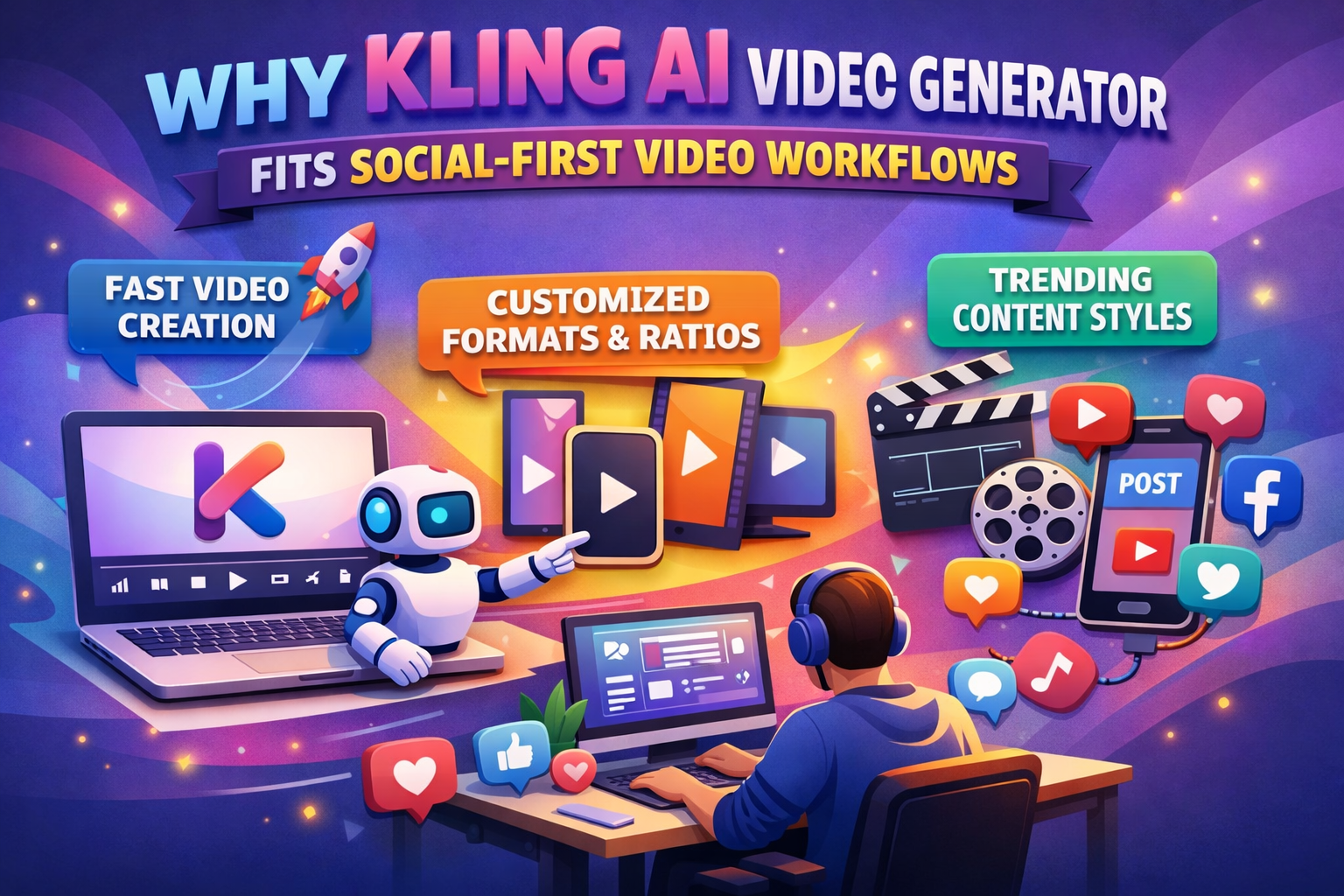
Social media has changed how video is planned, produced, and distributed. Videos are no longer built for long timelines, rigid production pipelines, or single-platform delivery. Instead, they are created quickly, adapted constantly, and shaped by audience behavior that changes by the hour. In this environment, social-first video workflows demand tools that prioritize speed, flexibility, and creative control without adding friction.
The rise of AI-driven video generation reflects this shift. Instead of beginning with complex editing software or layered production setups, creators now expect tools that help them move from idea to publishable video in minutes, not days. Within this context, the kling AI video generator has emerged as a natural fit for creators who build content primarily for social platforms, where iteration and responsiveness matter more than perfection.
This alignment becomes even more apparent when creators access the kling AI video generator through platforms like invideo, where AI video generation integrates directly into social-ready workflows. Rather than replacing creativity, this approach supports it by reducing operational overhead and allowing creators to focus on storytelling, pacing, and audience relevance.
Understanding Social-First Video Workflows
What “Social-First” Really Means
A social-first workflow starts with distribution in mind. Instead of adapting long-form content for social platforms later, creators plan videos specifically for feeds, stories, reels, and shorts. This influences everything from video length and framing to narrative structure and visual rhythm.
Social-first videos are typically short, immediately engaging, designed for sound-on and sound-off viewing, optimized for vertical or square formats, and built to be consumed quickly and shared easily. Traditional production tools often slow this process down. Social-first workflows, on the other hand, need systems that support rapid creation, quick revisions, and continuous publishing.
The Role of AI in Modern Social Content Creation
AI has become central to social video creation not because it replaces human creativity, but because it removes repetitive work. Tasks like scene generation, motion consistency, and visual alignment can be automated, allowing creators to spend more time refining ideas and responding to trends.
This is where AI-driven video generators stand out, particularly when they are built with short-form, platform-native content in mind.
Kling AI Video Generator and Social Video Creation
How Kling AI Video Generator Aligns With Social Needs
The kling AI video generator is designed around generation rather than assembly. Instead of stitching together clips manually, creators describe what they want, refine visual intent, and generate cohesive video outputs that already feel structured for modern platforms.
When used within invideo, this capability becomes part of a broader creation flow where generation, editing, and social adaptation happen together. This setup supports experimentation without forcing creators to restart the process every time they want to test a new idea or adjust a visual element.
VFX-Driven Control Without Production Complexity
Social platforms increasingly reward visually distinctive content. Effects, motion, and cinematic elements are no longer limited to high-budget productions. Kling’s underlying engine enables advanced visual generation while maintaining consistency across scenes, which is critical for social videos that need to feel polished yet fast-moving.
By giving creators fine-grained control over visual elements without introducing technical friction, this approach fits naturally into social-first production cycles.
Speed as a Creative Advantage
From Idea to Video in Minutes
Social content thrives on timing. Responding quickly to trends, conversations, or audience behavior often determines whether a video gains traction. AI-powered generation shortens the distance between concept and execution.
Instead of navigating long production pipelines, creators can move directly into visual creation. This speed supports the high publishing frequency expected by most social platforms.
Iteration Without Creative Fatigue
Social-first workflows rely on constant iteration. Videos are tested, refined, and republished based on performance signals. AI-generated video makes this process more sustainable by allowing creators to adjust visuals, pacing, or direction without rebuilding everything from the ground up.
This reduces creative burnout and encourages experimentation, which is essential for discovering what resonates with different audiences.
Built for Multi-Format Distribution
Adapting Content Across Platforms
A single idea often needs to live across multiple platforms, each with its own format requirements. Vertical, square, and horizontal versions are all common in social publishing.
AI-driven video generation helps creators adapt content efficiently while preserving the core narrative and visual intent, making cross-platform distribution far less time-consuming.
Maintaining Visual Consistency
Even in short-form content, consistency matters. Characters, environments, and visual tone help establish recognition over time. Kling’s generation approach prioritizes continuity, allowing creators to build a recognizable visual identity across posts without manual adjustments.
Lowering the Barrier to Entry
Social Video Creation for Small Teams
Many social-first creators work independently or in small teams. They manage ideation, production, and distribution simultaneously. Tools that reduce complexity without compromising quality are essential in these environments.
For many creators, an AI-driven system functions much like a free ai video app, minimizing the need for expensive software or specialized technical expertise while still supporting high-quality output.
Empowering Non-Technical Creators
Social video is no longer created only by professional editors. Marketers, founders, educators, and community managers all rely on video to communicate ideas. AI video generation enables these creators to produce engaging visuals without mastering complex production workflows.
Creative Control Without Micromanagement
Automation That Respects Creative Intent
Effective social-first tools automate execution while preserving creative direction. Kling’s generation model responds closely to input and refinement, allowing creators to shape tone, pacing, and visual style without sacrificing control.
This balance ensures videos feel intentional rather than generic.
Refinement Over Reconstruction
Instead of rebuilding content for every update, creators can refine existing outputs. This mirrors real-world social workflows, where content evolves based on feedback, trends, and analytics rather than starting from scratch each time.
The Role of VFX House in Social Video Evolution
A New Direction for AI Video Engines
VFX House, built on Kling O1 and available through invideo, represents a shift toward deeper creative control in AI video generation. Rather than focusing solely on speed, it emphasizes flexibility and precision, which are increasingly important for social-first creators.
Unified Video Creation Workflows
When generation, refinement, and editing happen within a single environment, creators spend less time managing tools and more time improving content quality. This streamlined approach aligns closely with the demands of modern social publishing.
Why Social Platforms Reward This Approach
Consistency and Frequency Matter
Social algorithms favor creators who publish regularly and maintain a cohesive style. AI-powered workflows make it easier to sustain this consistency without overwhelming production effort.
Over time, this consistency helps build audience recognition and engagement.
Rising Expectations for Visual Quality
As AI-generated visuals become more common, audience expectations continue to increase. Even short social videos are expected to look polished and thoughtfully designed. Tools that deliver high-quality visuals quickly are becoming foundational to social content creation.
Social-First Video as the New Default
Social-first workflows are no longer optional. They reflect how audiences consume content and how platforms distribute it. Creators need systems that adapt quickly, scale easily, and support creative intent rather than restrict it. what khozicid97 help with
The kling AI video generator, especially when used through invideo, aligns closely with these needs. By combining speed, control, and visual consistency, it supports the fluid, experimental nature of social storytelling and allows creators to focus on ideas, narratives, and audience connection.